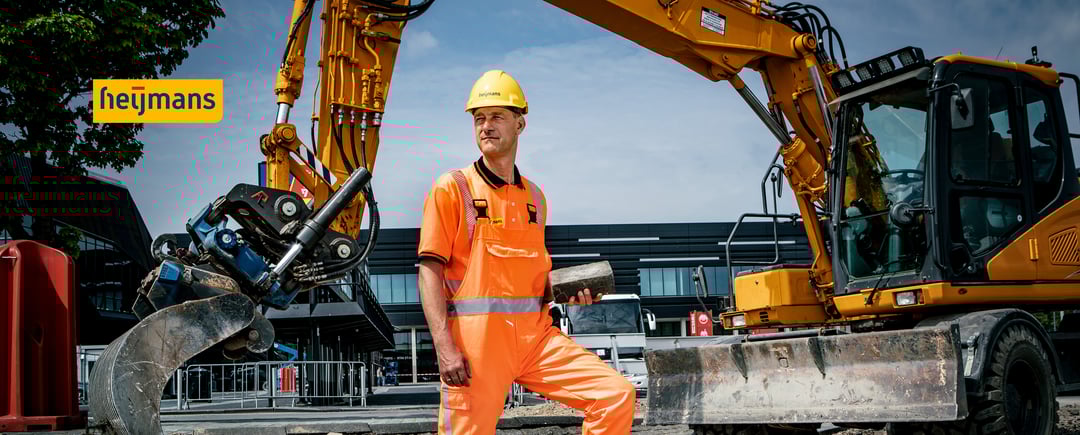
Heijmans, a Dutch major listed organisation working across infrastructure, building and maintenance, were looking to improve their protective clothing solution. Specifically, they required high-visibility orange workwear, in line with mandated safety requirements for their workers.
For this case study, we spoke to Heijmans, alongside representatives from TenCate Protective Fabrics (fabric supplier) and VeiligGoed (distributor).
In this case study, you will learn:
- How leading infrastructure company Heijmans selected a compliant high-visibility PPE clothing solution aligned with RWS and EN ISO 20471 standards
- How wear trials and end-user feedback improve comfort, fit and long-term adoption of protective clothing
- How fabric innovation can enhance both performance and wearer experience in demanding work environments
- How sustainability can be integrated into PPE without compromising safety or durability
- How collaboration across the value chain leads to more effective and future-proof workwear solutions
Why Heijmans needed a new high-visibility protective clothing solution?
Different risk profiles across business units
At present, Heijmans has over 5500 employees. The company is subdivided across several business units, including construction (residential), construction (utility), infrastructure and development.
With these different business units comes different risks, which then requires different measures to keep workers safe, manifesting foremost in workwear and PPE. For instance, the infrastructure unit works on and beside roads and highways. Therefore, for this unit the workwear must be hi-vis orange. In addition, the workwear must comply with the Netherlands’ Rijkswaterstaat (RWS) standardisation. This standardisation sets out a mandatory amount of hi-vis and reflective fabric that must be incorporated within the workwear.
Limitations of previous hi-vis workwear
Heijmans’ previous protective clothing package consisted of both hi-vis orange and hi-vis yellow clothing. This line of workwear was functional and had a straight fit. One of the biggest complaints from wearers of these garments at Heijmans was around their quality and comfort, which they wished to see improved.
As such, once the contract with the previous supplier came to an end, Heijmans decided to get back out on the market and see if there were any suppliers that fit better with their demands and long-term vision.
“Don’t forget that we are talking about workwear and PPE, so the main priority should always be safety. When you have got that right, the second priority should be comfort. Because if the workwear isn’t pleasant to wear, workers will not want to wear it.” — Jordy Langens, HSE Manager at Heijmans
Selecting new PPE clothing partners: tender and evaluation process
PPE clothing tender process: from 8 suppliers to final selection
In 2021, Heijmans issued a tender, and eight suppliers initially attended. This led to four suppliers pitching their presentations and two progressing to a final selection stage. VeiligGoed was ultimately selected. Following successful collaborations in the past, VeiligGoed recommended Van Heurck — part of the VP Textile Group — as the garment manufacturer for the new solution. Heijmans proceeded with this recommendation, impressed by the quality of service that Van Heurck was able to provide for end users, offering direct communication and a much more personal approach.
Developing a compliant hi-vis fabric for RWS standards
From the product development perspective, TenCate Protective Fabrics’ challenge was to develop a fabric that met all the relevant norms within hi-vis orange, and most importantly, met the RWS standardisation. This meant ensuring that the appropriate dye stuff and properties to meet the standards were in place. Furthermore, the fabric needed to continue complying with the norms after many washes, maintaining its strength and avoiding pilling. As such, the fabric used to make the garments had to be put under intensive testing in the lab, as well as repeated industrial laundering, to make sure it met the highest standards of durability.
Conducting wear trials: validating comfort, fit and performance in real conditions
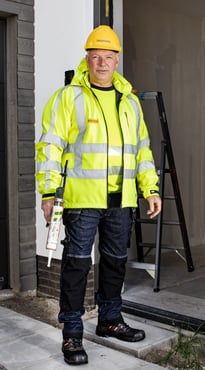 During the process of manufacturing the new workwear solution, Heijmans invited fifty employees to take part in a wear trial, where several workwear items were put to the test and feedback was given directly by the wearers. They were invited to work with the clothing, not only putting it to the test in terms of fit and comfort, but making sure it could fulfil the necessary safety and durability needs within their work environment. These workers came from multiple departments of the company, including infrastructure, construction (utility) and construction (residential). The feedback from these wear trials allowed the garments to be constantly refined and improved, including changes to fit, measurement and design (for instance, the positioning of pockets).
The final solution: comfortable, high-performance, and more sustainable hi-vis workwear
Fabric innovation: Tecawork® Ecogreen® EG270
Four sets of workwear pants were produced, as well as three winter jackets (parkas). The new solution consisted of a fabric produced by TenCate Protective Fabrics titled Tecawork® Ecogreen® EG270. This contained a 65/35 breakdown of recycled polyester and TENCEL™ Lyocell.
Improved comfort through TENCEL™ Lyocell
The fabric’s TENCEL™ Lyocell content makes the workwear softer against the skin and provides excellent moisture management control, significantly boosting its comfort levels compared to the previous solution (which was 100% polyester). The use of TENCEL™ Lyocell has the added bonus of being a more sustainable choice, as these fibres are drawn from sustainably sourced wood and 100% mechanically recycled polyester from PET bottles. To further demonstrate their commitment to sustainability, TenCate Protective Fabrics developed an Environmental Product Declaration (EPD®), transparently assessing and quantifying the product’s life cycle impact.
“We are proud to have delivered a solution which not only places the safety and comfort of the wearer at the forefront, but has the added bonus of being a more sustainable solution, making use of recycled content from post-consumer waste.” — Lindsay Hovenier, Product Manager at TenCate Protective Fabrics
Lower weight, higher wearer acceptance
To add to the heightened comfort levels, the EG270 fabric used in Heijmans new workwear weighs in at 270 grams per square meter, which is 30 grams lighter than the fabric used for the previous solution. It fulfils the RWS standardisation, has excellent colour retention properties after repeated industrial laundering, and meets the EN ISO 20471 standardisation for hi-vis clothing.
Modern and fitted garment design
The design for the new solution is modern and fitted, reflecting Heijmans desire to produce a garment that employees are proud to wear day in and day out. Placing the wearers feedback at the heart of the process proved to be a worthy investment, with the overwhelming response to the new workwear being that it was a big improvement from the previous solution.
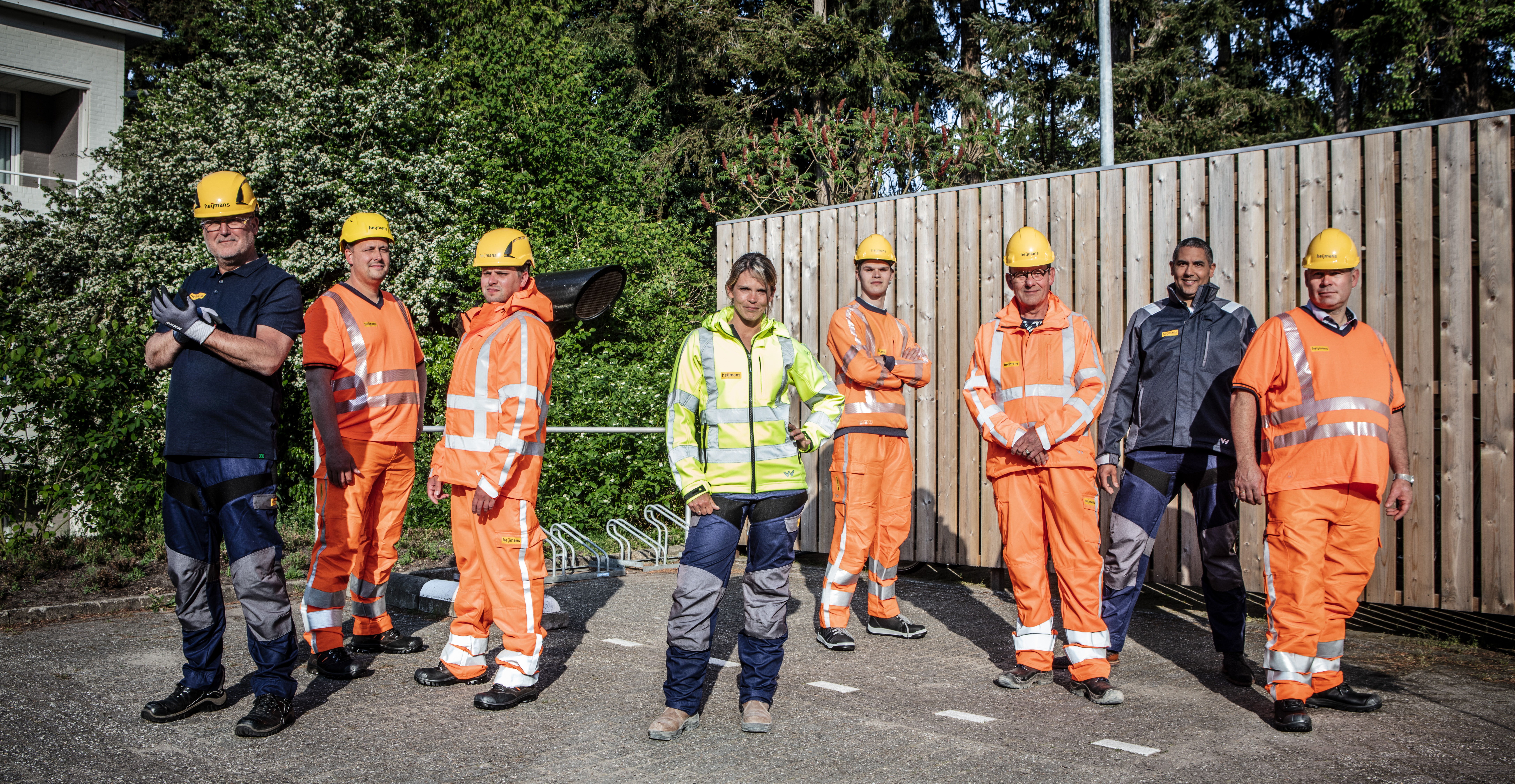
Heijmans began roll out of the new workwear across the company in May 2022.
“This solution isn’t something from a shelf or a catalogue; it’s a tailor-made total package.” — Sebastiaan Willemstein, Account Manager at VeiligGoed
Key learnings for HSE managers and PPE clothing decision-makers
Safety and comfort are interdependent
From the perspective of HSE management, it goes without saying that safety should always be at the top of the priority list when selecting new workwear. First and foremost, it is critical that the workwear meets the standardisations and norms required for the function that the wearer is fulfilling.
Once the safety elements are addressed, the second priority should be comfort. By ensuring that the workwear is comfortable within the particular environments it is being worn in, we can ensure that workers wear them correctly, and therefore remain protected. Indeed, in this sense, safety and comfort can work together hand-in-hand.
Lifecycle cost vs upfront price in PPE clothing decisions
After safety and comfort considerations, the priorities of sustainability and pricing can follow. Naturally, within the workwear industry — and the broader textiles industry, where waste and environmental impact is a known issue — sustainability must remain in mind, so that where feasible, we are able to reduce our environmental footprint. However, this cannot come at the expense of reducing the safety qualities of a workwear garment. Rather, it is important to seek out solutions that place sustainability alongside safety.
At the same time, pricing and finances are very real considerations that cannot be overlooked. It can be helpful to consider, for example, if a more expensive solution in the short-term may yield a positive longer-term investment in terms of lifecycle. This has a dual benefit, whereby not needing to replace workwear garments as frequently is both a more sustainable and financially responsible solution — once again proving that these priorities can work hand-in-hand, rather than as separate concepts.
How integrated partnerships strengthen PPE clothing solutions across the value chain
In terms of the value chain, the process from tender to solution made it abundantly clear that collaboration is essential.
Van Heurck, Heijmans, VeiligGoed and TenCate Protective Fabrics had to work closely together to select the right fabric that would comply with the RWS standardisation. This required a significant degree of knowledge exchange and learning among the partners, which can be taken forward into future ventures.
Are you looking to learn more about the process of selecting a new fabric for your PPE workwear solution?
Whether you’re wanting to learn more about the fabrics that are currently available on the market, or simply looking for advice on any aspect of the process towards developing a new workwear solution, we’re here to help. Get in touch with one of our specialists who will be more than happy to discuss your needs.




.png?width=399&name=Risk%20management%20for%20PPE%20clothing%20in%20the%20EV%20and%20battery%20industries%20(5).png)